Why I Recommend My Competitors
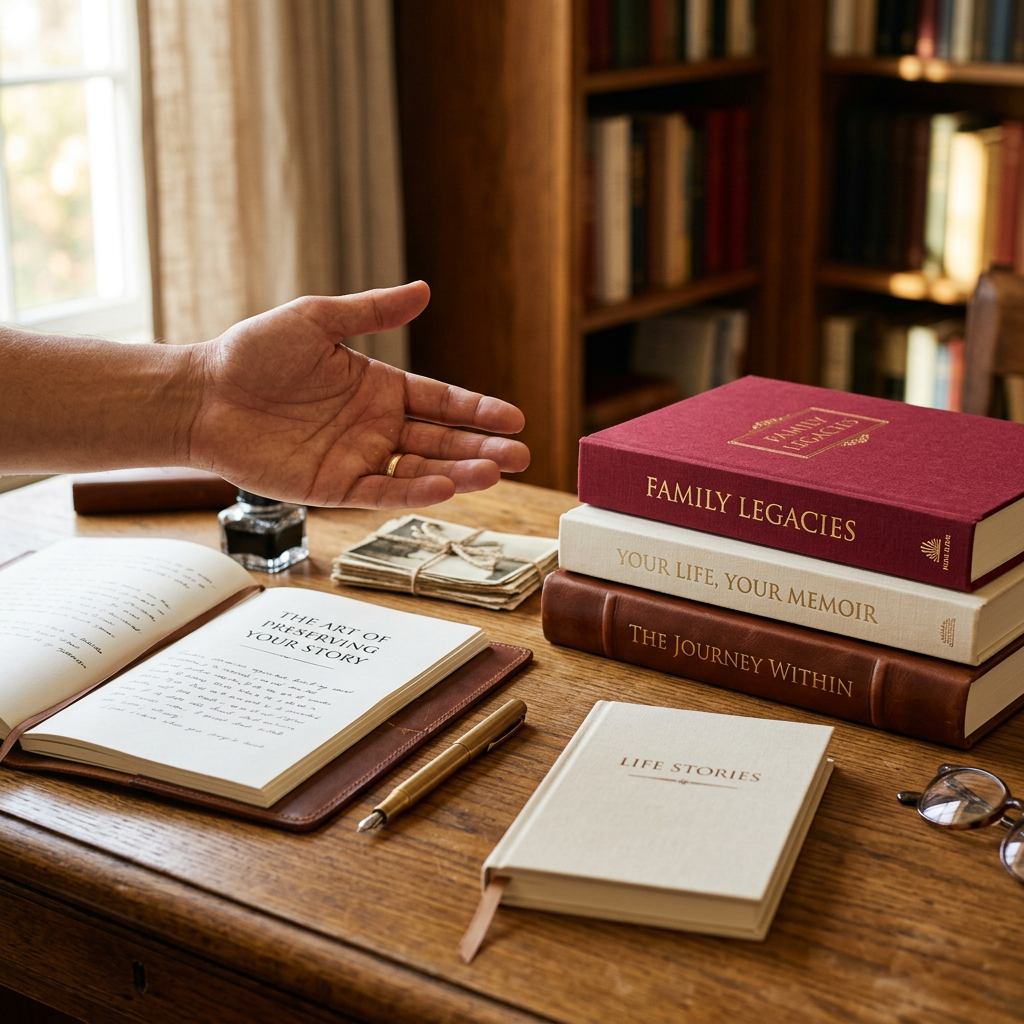
Before Life Story Guide existed, I tried everything out there. Some of it didn't work for my family. Some of it was brilliant. Here's my honest take on the full landscape, and why I'd rather you find the right fit than the wrong one.
Why I Recommend My Competitors
Let me say something that might surprise you coming from the founder of a life story preservation service: I genuinely recommend other services. Not reluctantly, not as a footnote, but openly and enthusiastically, in conversations, on this blog, and at length in my book.
Here's why.
Where This All Started
The companies and tools that some might call my competitors were actually my inspiration. Before Life Story Guide existed, I was a family member trying to solve the same problem you might be facing right now. I wanted to capture the stories of the people I loved before those stories were gone. So I did what most people do. I went looking for something that could help.
I explored the various products and services available: prompt apps like StoryWorth and Remento, memoir journals, guided recording tools, DIY kits. The idea behind all of them was beautiful. And for many families, it worked.
But for many others, it didn't.
Not because the products were bad. But because most people, when left alone with a blank page, a recording device, or a weekly email prompt, quietly stop. Not out of laziness. Not out of indifference. But because most of us do better in conversation than in isolation. We need another person in the room, someone asking the question, sitting with us in the silence, following the thread. That's what was missing. And that gap is what eventually became Life Story Guide.
But They Work. For the Right People.
Here's what I want to be clear about: services like StoryWorth and Remento have helped thousands of families preserve stories that would otherwise be gone. That's not nothing. That's an extraordinary amount of preserved human experience that deserves to be celebrated.
The people who thrive with those tools tend to share a few qualities. They're comfortable with self-reflection. They enjoy writing, or at least don't dread it. They can sit with a prompt, let it percolate, and produce something genuine and meaningful on their own. They have the discipline to show up week after week without external accountability. Some of the richest family histories I've ever encountered were built with nothing more than a journal, a consistent habit, and the willingness to be honest on the page.
If you are that person, or if you have a parent or grandparent who is, there is real value in those tools. I say so in my book. I walk through them in detail, explain how to get the most out of each one, and make the case for why they might be exactly the right fit.
I never want anyone to use Life Story Guide and feel they could have done it just as well with a fifteen-dollar journal from Amazon. That would be a failure on my part, not a success. So I give away the methodology. I share the questions. I explain the research. I make sure that anyone who wants to do this themselves, regardless of budget, has everything they need to do it well.
A Word on Ghostwriting
There's another path worth mentioning honestly. If you or someone you love has a story with a wider purpose, a memoir intended for publication, a book crafted for a specific audience, or a personal narrative that needs to be shaped with a particular commercial or literary goal in mind, then a skilled ghostwriter may be exactly what you need. A great ghostwriter takes your raw material, your notes, your recordings, your memories, and fleshes it out into something structurally powerful, narratively compelling, and purpose-built for a specific audience.
That is a different goal from what most families are actually after.
What Life Story Guide is built around is capturing the real person. The raw voice. The stories told in the way only that particular human being could tell them, refined just enough to be vivid and readable, but kept deeply true to how they actually spoke and thought and remembered. The goal is not to write toward a market. It's to preserve someone's personality so faithfully that the people who read it feel like they're sitting in the room with them.
And here's something worth saying directly: you would sometimes be surprised just how powerful that raw, honest, unfiltered story can be. Some of the most moving pieces of writing I've encountered weren't crafted by a professional author. They were the real words of a real person, shaped carefully but never smoothed into someone else's voice. That kind of writing can hold its own against anything on a bookshelf. The difference is simply that a bestseller isn't the point. Preserving the person is.
For most families, that is worth more than any amount of elegant prose written by someone else.
So What Is Life Story Guide, Exactly?
What we do is specific. We capture raw personality. We draw out stories through guided conversation with an expert conversational guide, someone trained to create the conditions where real honesty and real memory can surface. And then we turn what emerges into lasting formats: beautifully bound books, video recordings, permanent digital archives.
The difference is not the output. Plenty of services produce a book at the end. The difference is what goes into it, and how it gets there.
There is a body of research that explains why this matters. The "Stranger on the Train Effect" describes the well-documented phenomenon of people disclosing more openly to a trusted neutral party than to their closest family members. The concept of the "third place," a space that is neither home nor work, where social guards come down and people speak more freely, explains why a guided conversation with someone outside the family often surfaces stories that decades of Sunday dinners never did. These aren't marketing claims. They are findings from social psychology that point to something real about how human beings open up.
There is also something simpler at play. Accountability. Having a real person to meet at a real time, with a real expectation that something will happen, is often the difference between a project that gets done and one that stays on the someday list forever.
The Personal Trainer Analogy
I always come back to this comparison because it captures it better than anything else I've found.
Imagine you want to get fit. You could download the best workout app on the market. You could buy excellent equipment. You could read everything ever written about training methodology. Some people do exactly that and get extraordinary results. They have the self-discipline, the knowledge, and the internal motivation to make it work entirely on their own.
Others, whether they struggle to train consistently without external support, or whether they're already in good shape and want to reach the next level, benefit from working with a personal trainer. Not because the app was bad. Not because they failed at something. But because one-on-one attention from a skilled human being produces something that even the best self-directed tools cannot fully replicate.
That's how I think about the full landscape of life story preservation. The tools are real. The DIY path is valid. StoryWorth, Remento, memoir journals, and prompt apps have genuine value for the people they fit. The ghostwriter is the right call for those with a specific publishing goal. And for those who want the full depth of a guided human conversation to be what goes into the record, with all the raw personality intact, that's where we come in.
What I Actually Want
I want every family to have the stories of the people they love. I want those stories preserved in formats that will outlast all of us. I want grandchildren who never met their great-grandparents to know them anyway, through their voice, their words, the particular way they described the world they lived in.
If StoryWorth gets that done, wonderful. If Remento gets that done, wonderful. If a prompt journal or a ghostwriter gets that done, wonderful. If Life Story Guide gets that done, also wonderful.
The goal isn't to use my service. The goal is to capture the story before the window closes.
Start somewhere. Start now.
At Life Story Guide, our expert conversational guides are here for the families who want to go deeper than a prompt can take them. If you're not sure which path is right for your family, we're happy to talk it through honestly, with no pressure and no sales pitch. Start with a free trial conversation at lifestoryguide.com
— Aby C. Abraham
Founder, Life Story Guide · Author, The Strangers We Love