What AI Cannot Replace (And Why That Question Keeps Getting Asked Wrong)
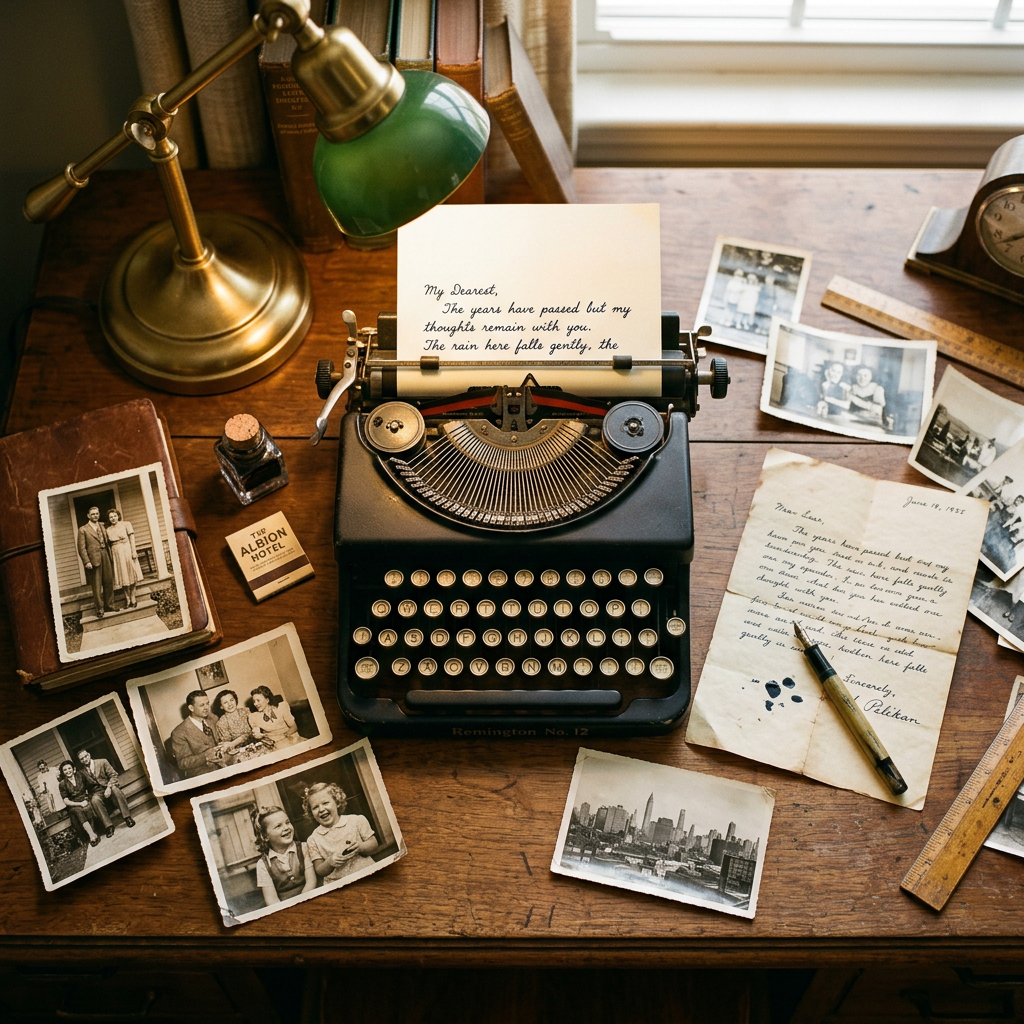
Every week someone says AI can't do something. The next week it can. We need to stop playing that game and ask a better question: what can AI never replace by its very nature?
What AI Cannot Replace (And Why That Question Keeps Getting Asked Wrong)
Every week someone says AI can do this, but it can't do that as well as a human. And then the next week it can do that thing, and do it pretty well.
We need to stop playing that game.
It is a game being played out of a well-meaning but flawed understanding of what it means to be human. We have placed far too much weight on our technical skill sets to determine our value as people. Almost anything that is a technical skill, anything that can be taught and replicated, AI will eventually handle. So the question isn't what it can't do yet. The question is what it cannot replace by its very nature.
And I keep coming back to the same answer: the unrepeatable specificity of a life actually lived.
Relatable Beats Impressive
Daniel Priestley made a point on Diary of a CEO recently that stuck with me. He talked about how relatable beats impressive in an AI world, and how the key to surviving what's coming is finding what only you can do. I think he's pointing at something real.
But I'd push it one step further. It's not just about being relatable. It's about being specific. Irreducibly, unmistakably specific.
An algorithm can write a story about a grandfather who immigrated from a difficult place. It can get the arc right. The emotional beats. The structure. It can make you feel something in the general direction of what that experience was like.
What it cannot give you is your actual grandfather's specific fear on the boat. The particular joke he told to hide how scared he was. The exact moment he decided to stay. The detail that doesn't belong in any template because it happened once, to one person, and nowhere else.
That specificity is not a stylistic choice. It is the substance itself. And it only exists in one place: in the person who lived it.
What People Are Actually Paying For
Here's something worth sitting with. People already understand this, even if they haven't said it out loud.
They still pay to be in a room for a concert, even though the recording is free. They pay more for handmade, even when the machine-made version is functionally equal. They want "based on a true story" on a film, even when the fiction is sharper. They seek out the original letter, not the transcription.
What they're paying for, in every one of those cases, isn't the content. It's the humanity behind it. The fact that a real person was present. That something was at stake for someone real. That this specific thing happened and cannot be manufactured or replicated, no matter how sophisticated the tool.
People want something for the very fact that a real human was involved, even when they know the output is the same. That instinct is not nostalgia. It is recognition of something true about what makes experience meaningful.
Why I Made the Choice I Did
This is honestly one of the reasons I made a deliberate decision at Life Story Guide to use real human guides rather than AI.
Could we build an AI interview process? Technically, yes. I actually did build one, early on. An AI life story interviewer. It was unbelievably impressive. The questions were thoughtful. The follow-ups were responsive. The structure was sound.
And yet.
There is something that happens in a real conversation between two people who know they are being seen by another human that no prompt can replicate. The moment someone says something they have never said out loud before, not because the question was clever, but because another human being was genuinely present with them and created the space for it. That moment is relational. It is earned. It cannot be scripted or automated, because it depends on the felt experience of being witnessed by someone who actually cares what you say next.
That's the thing worth protecting.
Your Lived Experience Is Your Intellectual Property
I have been realizing, more and more, that the most important thing any of us owns is not a skill. It's a story. A particular, embodied, unrepeatable record of being alive in a specific time and place with specific people, making specific choices that cannot be fully explained and certainly cannot be generated.
AI can help you shape that story. It can help you organize it, refine it, share it more widely than you could on your own. Used well, it is a genuinely powerful tool in service of preservation.
But the foundation has to be human. The raw material has to come from a real life, drawn out by real presence, captured in the particular way that only happens when one person is truly paying attention to another.
That part cannot be outsourced. And it is, in the end, the only part that matters.
If you want to see where your family currently stands with preserving those stories, the free assessment at lifestoryguide.com takes just a few minutes. It's a good place to start.
— Aby C. Abraham
Founder, Life Story Guide · Author, The Strangers We Love